Archive | Uncategorized RSS feed for this section

Lieutenant Edward Ratcliffe Garth Russell Evans—Teddy Evans

21 Nov

LIEUTENANT EDWARD RATCLIFFE GARTH RUSSELL EVANS—TEDDY EVANS

That the ‘Terra Nova’ sailed from Cardiff was due to Teddy Evans’ valuable connections with local
business men, commercial organisations and the enthusiastic support of the ‘Western Mail’. Evans had
originally planned to lead his own expedition, but after a London meeting with Scott in July 1909, the
men agreed to cooperate, rather than compete in their efforts to reach the South Pole – Scott would lead
the expedition, Evans would sail as second in command. The considerable resources from Wales were
put at the disposal of the ‘Terra Nova’.

Many months later, in late 1911, Scott and Evans were on at the final assault on the Pole. At this stage
there were twelve men man-hauling three sledges. Two of these groups were relatively rested, but on
Evans’ team, he and Petty Officer William Lashly had been man-hauling since 1 November 1911.
The strain showed and Scott became impatient with Evans’ perceived carelessness and
disorganisation. On 20 December 1911, the first supporting party of four turned back, leaving eight
men to go on. Evans’ team was reorganised with himself, Lieutenant Bowers, Lashly, and Able Seaman Thomas Crean. But on 3 January 1912, Scott decided that he would incorporate Bowers into his on-
going team and that Evans should return with a THREE-man team, ‘the Last Supporting Party’. So on
4 January 1912, Evans, Lashly and Crean turned back.

Reducing the pulling power to three slowed Evans’ party. On the glacier Evans began to suffer physical problems, initially snow-blindness (painful and limiting his vision), and later, signs of scurvy. The scurvy symptoms and signs increased rapidly causing significant physical deterioration. Soon he had to be carried on the sledge by Lashly and Crean.

By 13 February 1912 Evans had deteriorated to such a stage that he ordered his companions to leave him to his fate and return to base. They refused, ‘the first and last time my orders as a naval officer were disobeyed’. A blizzard finally halted the three men’s progress on 17 February. They were only thirty-five miles from the base camp at Hut Point, but it was clear that Lashly and Crean could not continue with the sledge pulling. Lashly remained with Evans whilst Crean headed north to seek aid. When he managed to return with help and supplies, Evans was thought to be near to death. The men carefully transported him back to the main camp, arriving a few days before the relief ship the ‘Terra Nova’. He gradually regained his physical health, though he remained bedridden until April, by which time ‘Terra Nova’ had arrived in New Zealand.

Now a recent article by Professor Chris Turney ‘Why didn’t they ask Evans?’ has been published in the
Polar Record (Vol. 53, Issue 5, Sept. 2017, pp. 498-511). The piece throws doubts on Evans’
behaviour during the expedition and suggests that Evans’ actions on the return journey played into
the deaths of Scott and his men. The work focuses on the shortage of food at key depots, the apparently
deliberate obfuscation of when Evans actually fell ill with scurvy (by suggesting that the illness developed
earlier on the return than had been understood in London) and that Evans had taken pemmican
and other food supplies from the food caches before he succumbed to scurvy, thus prejudicing Scott’s return march. Finally he failed to pass on orders given by Scott regarding the dogs.

Professor Turney concludes that Evans’actions on and off the ice can at best be described as
ineffectual, at worst deliberate sabotage. He wonders why Evans was not questioned more about these
events on his return to England.

I do not agree with these comments – more will follow later.

Further comments on Scott’s ‘suicide’

5 Nov

Some years ago, on this blog, we had an animated correspondence on the subject of Scott’s ‘suicide’ – this was mostly centered on Professor Sienicki’s assertions in his paper ‘The Weather and its Role in Captain F. Scott and his Companions’ Deaths’, that Scott, having realised that there was no hope of him returning alive, decided on ‘a slow suicide’. Having reached this decision he was fearful that critics in Britain (who had previously slandered him and Lt.Royds, over the latter’s meteorological records from the ‘Discovery’ expedition), would pounce again, so, to gain public sympathy for himself and his own and his companions’ families, he and Bowers falsified their meteorological data and recorded abnormally low temperatures.
Professor Sienicki repeated these assertions in his book on the subject and was critical of other expert conclusions, mentioning particularly, Susan Solomon, the award winning atmospheric chemist.
As would be expected there was much argument about this conclusion and on this blog Bill Alp, an I.T. and software expert, persistently asked for details that would support Professor Sienicki’s data.
Now the American Meteorological Society has published a paper, which, without mentioning Sienicki,appears to refute his thesis.(http;//journals.ametsoc.org/doi/pdf/10.1175/BAMS-D-17-0013.1)

The paper shows that whilst several studies have focussed on the exceptionally cold conditions that Scott and his party suffered in the end of the Antarctic summer of 1912, both Scott and Amundsen experienced exceptional meteorological conditions – there were unusually WARM conditions in the interior of the Ross Ice Shelf and Amundsen’s party also experienced unusually high temperatures on the plateau as they approached the South Pole. At the same time Scott (well behind Amundsen) experienced these warmer than average temperatures on the Barrier. Scott also had higher-than-usual temperatures as his party descended the Beardmore Glacier. This warm period was followed by a colder than average temperature on the Ross Ice Shelf in early March. It is suggested, amongst other things, that the period of warmth may have lulled Scott into a sense of security before the temperatures dropped unusually and dramatically, sharply. There was no manipulation of the data — Scott’s cold weather observations were no more extreme than the high temperature observations.

Bill Alp has written the following:

It is great to see that a new research article, An Exceptional Summer during the South Pole Race of 1911-1912, has been published by the prestigious American Meteorological Society. It may be viewed at: http://journals.ametsoc.org/doi/pdf/10.1175/BAMS-D-17-0013.1
I like the article and recommend it to others because:
1. It provides an even-handed non-partisan analysis, including Amundsen’s meteorological observations, and it addresses the exceptionally warm period that Amundsen experienced in December 1911.
2. It does not propose any bizarre theories about Scott falsifying his temperature records in order to pave the way for his own suicide. Fogt et al simply show that most of the extreme temperature and pressure observations during this exceptional season are about two standard deviations above or below the mean value in the climatology model they used, called ERA-Int. Scott’s cold March temperature observations are no more extreme that Amundsen’s high December temperature observations. [Noting that observations of under-sledge temperatures were excluded because pooled cold air could cause a cold bias].
3. With a lifetime of experience in IT and software project management, I have wide personal experience in reviewing and probing the adequacy of testing that has been carried out in development of complex systems. Fogt’s article rings true for me.
4. The article has been through the peer review process of a respectable research institution.

So there we are. There will probably be more to follow

The Ben Nevis Observatory

24 Oct

I have always been interested in the history of the Ben Nevis Observatory. I have written about it before but I think this remarkable development deserves further comment.
The observatory was opened on the summit of Ben Nevis (4,406 feet), in October 1893; and enlarged in 1894, but observations (as distinct to the actual Observatory) started in 1881, when a determined meteorologist Clement Wragge climbed Ben Nevis to make recordings. He got to the summit virtually every day between early June and mid October and used pigeons to transport his readings to Fort William where his wife took the low level readings and telegraphed the results to London! Wragge hoped that after his considerable efforts, he would be the first Supervisor when the observatory was built, but he was passed over in favour of the experienced meteorologist, Robert Omond.
William Speirs Bruce applied to join the Observatory in1894, he needed experience in recording detailed meteorological data in relation to his plans to lead an expedition to Antarctica. Initially his appointment was a locum post, but he was appointed to a substantive position on the summit, under the leadership of Robert Omond, in1895. His aim to achieve meteorological experience was achieved; in his year on the summit was given the most rigorous training.
In 1896 a Low Level Observatory was built at Fort William and manned by Robert Mossman, who would become closely associated with Bruce and went on the Scotia expedition as Meteorologist. The recordings from these two levels were synchronised, this was a first in Britain and led to increased understanding of weather conditions in mountainous regions.
Bruce’s duties were onerous. Observations were made, every hour whenever possible, in rapidly changing and often challenging, conditions. In winter, when snow made the station isolated enough even for Bruce, the snowdrifts were sometimes so high that the men had to get to their instruments via snow tunnels, or exit the observatory via the tower. This experience plus the changes in wind and fog, was an excellent training for Antarctic meteorology.
It was found that fog was present on the summit for 80% of the time in November, December and January 1895/6 – it was common for the summit to be capped in fog when surrounding summits were clear (later Bruce was to tell his companions in Antarctica that they did not know what fog was unless they had experienced it on Ben Nevis). Temperature comparisons between the high and low stations showed that the average fall in temperature between Fort William and the Summit was 15.3°F, with a mean annual temperature at the summit of 31.5° F, compared with 46.8°F. at the base station. Annual rainfall at the summit was approximately double that at Fort William.
Distinguished scientists visited the summit to observe its activities. Amongst these was C.T.R.Wilson, a Scottish physicist. One morning Wilson noted that the rays of the sun cast his shadow, enormously magnified and surmounted by a coloured halo, onto the surface of a fog cloud on the opposite mountain top (this phenomenon had been described by Johann Silberschlag in 1780 and was called the Brocken Spectre).
Wilson recognised that this phenomenon was due to supersaturated water droplets, in the form of fog, which fragmented the sun’s rays into its component parts.
In subsequent laboratory experiments he used sealed glass containers of supersaturated water droplets, (which he called the Cloud Chamber), to demonstrate images of the tracks of charged particles released by X-rays and radioactive materials. Different sized particles with different speeds created different trail patterns – for example an alpha particle track is thick and straight, others are wispy.
The Cloud Chamber was the first tool to be able to follow the path of otherwise invisible particles and show the variety of their size and speed. Wilson was awarded the Nobel Prize in 1927 for this work.
Bruce spent a year on Ben Nevis. Sadly recurring shortfalls in funds led to the observatory being closed in 1904, nine years after he had left it.

The cloud chamber is described as follows: a sealed environment containing a supersaturated vapour of water or alcohol. An energetic charged particle (for example, an alpha or beta particle) interacts with the gaseous mixture by knocking electrons off gas molecules via electrostatic forces during collisions, resulting in a trail of ionised gas particles. The resulting ions act as condensation centres, around which a mist-like trail of small droplets form if the gas mixture is at the point of condensation. These droplets are visible as a “cloud” track that persist for several seconds while the droplets fall through the vapour. These tracks have characteristic shapes. For example, an alpha particle track is thick and straight, while an electron track is wispy and shows more evidence of deflections by collisions.
Cloud chambers played a prominent role in the experimental particle physics from the 1920s to the 1950s, until the advent of the bubble chamber. In particular, the discoveries of the positron in 1932 and the muon in 1936, both by Carl Anderson (awarded a Nobel Prize in Physics in 1936), used cloud chambers. Discovery of the kaon by George Rochester and Clifford Charles Butler in 1947, also was made using a cloud chamber as the detector. In each case, cosmic rays were the source of ionising radiation.

caption: Ben Nevis Observatory after Ice storm
(photo facing page 64 N.Rudmose Brown’s’Naturalist at the Poles’)

CAPTAIN THOMAS ROBERTSON 1855-1918

12 Oct

It is all to easy to forget the ‘other’ man who contributed to the success of the expeditions. On the ‘Scotia’ expedition Captain Robertson was pivotal to its success.

He was one man with whom Bruce never fell out; Bruce admired the Captain’s superb ice navigation skills and his ‘miraculous’ ability to anticipate and avoid the numerous potential emergencies that ‘Scotia’ encountered on her exploration to the South in 1903.
Thomas Robertson was born in Peterhead in 1855. His father and both his grandfathers were whaling captains, and from childhood he had a close association with the sea. His apprenticeship was served on a Peterhead merchant vessel trading with Australia and China but, on his return to England he decided to join the whaling and sealing industry. In this work he went to the Arctic, first as Mate on the ‘Jan Mayen’ of Dundee and then, at the age of twenty-four, as Master of the ‘Polar Star’, in which role he made voyages to the seal and fishery grounds off East Greenland and the Davis Straits. These voyages gave valuable experience; the ships were sail driven – this was before steam was in general use on whaling ships- and the knowledge he gained in handling these sailing vessels through the iceberg- laden north, was an invaluable asset when later he commanded ships with steam auxiliary power.

Bruce first encountered Robertson on the Dundee Whaling Expedition to the Antarctic of 1892-1893 when he (Bruce), sailed as Surgeon/Naturalist on ‘Balaena’, one of the five whalers going South in search of Right Whales. Robertson was Captain of one of the smaller ships, the ‘Active’. Bruce was accompanied on the expedition by his friend and fellow student Burn Murdoch. When Burn Murdoch wrote a book, ‘From Edinburgh to the Antarctic’, criticising the captain for the few opportunities allowed for scientific work on the expedition, Robertson wrote a defence. He said that it was difficult for the ‘passengers’ to be aware of the petty tyrannies imposed on a whaling captain.

The two men met again in the summer of 1897. Bruce was a scientist on the Franz Josef expedition when Captain Robertson, now Captain of ‘Balaena’ and on a whaling sortie, visited the archipelago. The meeting led to Robertson being later appointed as Captain of the ‘Scotia’ in 1902 when his skill in avoiding getting trapped in the Polar ice was pivotal. His plan to avoid the ice that swept up from the southeast of the Weddell Sea by sailing above it, became a benchmark for later expeditions. His contribution to the success of the ‘Scotia’ expedition was readily acknowledged by Bruce.

Robertson was naturally ambitious to further his career. At this time Shackleton was Secretary of the Royal Scottish Geographical Society and Robertson wrote to him in October 1904:
Lieutenant Shackleton RNR
Edinburgh
Dear Sir
As I was in command of the ship of the Scottish Antarctic expedition I would esteem it as a great honour if your society would make one a fellow. I did some work in the Antarctic some years ago and I think that an FRGS would help one in getting charge of some expedition where I would have a chance of doing some geographical work in the future.
Trusting you will lay my request before your council I am yours faithfully Thomas Robertson.

The council approved Robertson’s Fellowship of the Royal Scottish Geographical Society and at their meeting on Thursday 20th October 1904, the council awarded the society’s silver medal to Captain Robertson. Bruce was awarded the Gold Medal.

Following the Antarctic expedition it was planned that ‘Scotia’ would see further use by the Universities of Scotland as a research vessel: however it became necessary to sell her, to recoup some of the expedition costs and she and Robertson were reunited as Robertson sailed her as a sealer and whaler off the Greenland coast. On the 15th February 1913 she was requisitioned, (still under Robertson’s command,) by the Board of Trade for use as a weathership on the Grand Banks of Newfoundland in order to give iceberg warnings to shipping; for this a Marconi wireless was fitted so allowing communications with stations on the coast of Labrador and Newfoundland.

When members of Shackleton’s ‘Nimrod’ expedition were awarded the Polar Medal, Bruce submitted a request for the crew of ‘Scotia’ to be awarded the award. This was refused by Edward VII. Bruce reapplied in 1913 but the request was refused again by George V. Bruce wrote to Charles Price, Edinburgh MP and Bruce supporter, in August 1917, that ‘Robertson was dying without his well won white ribbon! The Mate is dead! The Second Mate is dead!! the Chief Engineer is dead!!! everyone as good men as have ever served on any Polar Expedition yet they did not receive the white ribbon. Surely it can merely be treated as an omission by the King, the public need never know that King Edward ever considered the matter’.
The medal was not awarded.

But Robertson’s reputation as an outstanding seaman is assured. He had a remarkable record; in nearly forty years of Polar work he neither lost a ship, nor a man. He was a man to ride the waters with. In numerous emergencies, when a moment’s hesitation could have resulted in disaster, his natural gifts as an ice pilot were complimented by an intuition that on occasions seemed miraculous.

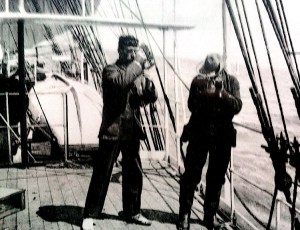
Taking sightings On Scotia Captain Robertson with Mr. Fitchie

Addison’s Disease and Deaths on Franklin’s North West Passage Expedition of the 1840s

12 Sep

I was interested to read that Professor Russell Taichman of the University of Michigan, an expert on the Franklin expedition and the North West Passage, has developed a new theory to help explain deaths amongst the Franklin naval crew -a mystery that continues to intrigue. As is well known there were no survivors amongst the 129 crew on this expedition. Malnutrition, scurvy, lead poisoning, tuberculosis and even botulism have been considered.
Professor Taichman and his colleagues now propose that tuberculosis, a very common disease at the time, could have damaged the adrenal glands and resulted in Addison’s disease an endocrine disorder, which causes a reduction of steroid hormone output. This condition, Professor Taichman suggests, may well have been the cause of some of the deaths. Their findings were published in the journal ‘Arctic’ earlier this year.
When, in 1846, the ships ‘Erebus’ and ‘Terror’ became trapped near King William Island (northern Canada), they were well stocked with canned food and the crew spent two years on and around the island hoping that the ice would melt and their ships escape.
Inuit accounts described emaciated crewmembers with “hard, dry and black” mouths and Professor Taichman, decided to study the various cause-of-death theories and consider how each condition affects the oral cavity.
Taichman and Mark MacEachern, a librarian at the University of Michigan Taubman Health Sciences Library, cross-referenced the crew’s physical symptoms with known diseases. They analysed 1,718 medical citations and were interested to find that the suggestion of Addison’s disease kept appearing during the analysis. In the 1840s the most common cause of the disease was tuberculosis. Potential supporting evidence for tuberculosis was discovered when autopsies of three sailors who had died and were buried on a nearby island,revealed evidence of tuberculosis.
Addison’s disease was not described until 1855 and all of Addison’s six original patients had tuberculosis of the adrenal glands. Nowadays however, the diagnosis of Addison’s disease does not imply any particular underlying diagnosis (of which there are several). Sufferers have poor regulation of sodium, low blood pressure, a curious pigmentation of the mouth and skin creases of the hands; they become dehydrated, and cannot maintain their weight even when food is available. The diagnosis is easy to arrive at nowadays as long as the symptoms are recognised as being possibly due to Addison’s. I vividly remember one young lady who was reduced to literally crawling up stairs in her home before the diagnosis was finally considered.
TB causing Addison’s disease seems a very possible cause of death in some of these poor crewmembers in their terrible situation.


.

Autism and Bruce

30 Aug

A colleague has sent me an excerpt from an article in ‘The Times’ written by Kathy Lette regarding autism. Kathy’s son has autism, which she summarises as an inability to socialise, a chronic obsessive compulsive disorder and anxiety, linked often, with a high I.Q. Kathy makes the point that autistic people often have abilities which may not be apparent and her advice is ‘feed their passions, as you never know where it might lead’.

A friend of mine also has a son with autistic characteristics. She comments that autistic people seem to think differently from the norm – it is certainly well known that they often speak without a filter, saying precisely what they are thinking, with little insight into the effects of their comments,so making social situations a minefield. Poor communication can result in misunderstandings and irascibility on both sides

In relation to Bruce; socialisation was not his forte. His friend Rudmose Brown, a loyal friend of many years, admitted this in his book on Bruce that aimed to bring Bruce to the attention of the wider world. Rudmose Brown wrote that even he, with all his loyalty and sympathy could not truly penetrate Bruce’s reticence and reserve. Bruce never fully confided in him and that: ‘there seemed to be a barrier that no man and certainly no woman ever crossed. He seldom if ever spoke of his family and childhood, rarely of his private concerns, and never of his philosophy of life’. This seems to me very suggestive of an autistic trait. Bruce never invited friends to his home, his wife Jessie, became increasingly isolated, separated from family and friends and with insufficient funds. When Bruce actually was at home, his granddaughter understands that he would bury himself in his study, ignoring trays of food left outside his door, compulsively immersed in his work. He was with his family, but not in it.

He was certainly obsessive, perhaps he needed to be, the work of his Scottish Oceanograpghical Laboratory was overwhelming, Thousands of specimens from his voyage to the Weddell Sea had to be sorted, described, reported, sent to experts in the United Kingdom and Europe and amalgamated into seven hefty volumes (six scientific). His laboratory became his home as he laboured for years with his magnum opus. He had no time for anything but his work.

He could well have been anxious He certainly could be irritable. His friend and admirer the meteorologist Mossman wrote, ‘I hear Bruce has had a row with Keltie. I do not know what about but I think it is a great pity that he should “fall out” with so many people’. Neither was Bruce reserved about recording his irritation in print without pause for consideration of the effects of his comments – as a young naturalist his anger was aroused by a review of his friend, Burn Murdoch’s account of a whaling voyage to the Antarctic. Bruce wrote provocatively and to no less a person than the Editor of ‘Natural Science’, saying that he agreed with Burn Murdoch that science should be for everyone and he supported his friend’s comment that it was a hideous marvel that though Dundonians had shown enterprise in sending four ships to the Antarctic, they had shown a total disregard for the scientific possibilities of such a cruise, (this, predictably, met with an ‘anything but a friendly reception in Dundee seafaring circles’).

Again, on reviewing Admiralty maps of an Arctic island he published–‘I find more or less a definite map of the island but, on inspection I found this to be, as I expected, little more than a conglomeration of a series of indefinite sketches, all inaccurate but each one less inaccurate than the resulting conglomerate’.

Commenting on ‘rivalry’ between the Royal Geographic Society and the Royal Scottish Geographical Society he wrote ‘I did not know that there was this rivalry between the London and Scottish Societies, which caused them either to try or prevent the other getting geographical information. It is scarcely in the scientific spirit’.

Such comments must have been counter productive, antagonising those he wished to influence, but Bruce could not see this – he lacked insight. His situation was made worse because he was looking for support at the same time as Scott and Shackleton, both men of charm and persuasion and both moreover, able to contact people of influence. These were lines of approach not open to Bruce.

It is always difficult to make a diagnosis retrospectively but I think the evidence suggests that Bruce displayed a strong autistic tendency that prejudiced his reputation and reduced recognition with regard to his considerable achievements. He might have achieved more if he had not had these traits and had been able to get on better with other people – alternatively, there is a fine line between being single minded and being obsessive and it can be argued that he might not have achieved anything without an autistic streak which lead to his obsession, and his scientific successes.

William Speirs Bruce and Autism

7 Aug

I have now spent some years reading, writing and thinking about Bruce. Bruce led an important Scottish expedition to Antarctica on his ship ‘Scotia’. Subsequently he spent years building up the Scottish Oceanographical Laboratory in Edinburgh, which, he hoped would be a permanent national establishment. In addition he started the Scottish Spitsbergen Syndicate. The syndicate aimed to prospect for minerals in the Arctic and in this work he became thoroughly enmeshed in geopolitics as he petitioned the British Government to annex Spitsbergen

I have come to the conclusion that his (considerable) financial and logistical problems were exacerbated by the fact that he exhibited characteristics that today would be considered as part of the autistic spectrum. These characteristics significantly complicated his dealings with other people.

Autism is of course a wide field, but reasons for considering Bruce belonged in this field are:

Bruce’s loyal friend R.N Rudmose Brown (who wrote a biography of Bruce after his death, an appreciation of his many talents), wrote that even with him (Rudmose Brown), there was never a complete confidence: ‘There seemed to be a barrier that no man and certainly no woman ever crossed. He seldom if ever spoke of his family and childhood, rarely of his private concerns & never of his philosophy of life’.

Bruce clearly did have problems with social communications. His letter to his supporter, the Secretary of the Royal Geographical Society, Dr. Hugh Robert Mill, illustrates this. ‘I was intending to tell Mrs. Mill and yourself the other day that I was intending to marry, but when the time came it seemed even more difficult to say so than to reach the South Pole. Such is the case however andI should not like the event to take place without having told you’.

His poor communication skills would have made him irascible – he had quarrels through out his career and seems to have been unaware of the effect that his outspoken comments made on recipients. These quarrels could go on for years. A colleague from student days wrote that he was ‘as Prickly as the Scottish thistle itself’. Another long term associate and supporter (who regularly sent money to help the Bruce family out), wrote ‘I hear Bruce has had a row with Keltie. I do not know what about but I think it is a great pity that he should “fall out” with so many people. Even when one is slighted it is just as well to keep quiet. If a man is doing good work and he is respected he is bound to come out on top sooner than later’.

During his work he had ongoing problems with the British Government, which must have been worsened by his regular outspoken and written criticism of the government’s lack of support for his Scottish demands when compared with its comparative generosity to the English explorers Scott and Shackleton. The government’s refusal to annex Spitsbergen again promoted his public criticism. This, and his (politically unwise) harnessing of his demands to Scottish nationalist sympathies must have alienated the authorities and affected their response to his regular demands for financial backing.

He had scant insight into the demands of family life – even when he was ‘with’ the family he was not ‘in’ it. When he was at home he remained doggedly immersed in his current project, totally ignoring other demands on his time. He would spend days in his study, immersed in his work, ignoring the trays of food left outside the door. He was prepared to sail on his Antarctic expedition the ‘Scotia’ with no pay, apparently without thought of the effect on his wife, struggling to make ends meet, isolated from friends and family, and with a small baby. Although concerned about his children he spent little time with them. The marriage did not last.

Finally, he had a collecting mania. Apparently every scrap of paper he had ever received was in his office after his death!

ARCTIC OIL

21 Jul

It is interesting that the frozen Arctic, long considered to be of no commercial or strategic importance, is now increasingly significant in world geopolitics. It was a prescient move when Russia claimed Franz Joseph Land in 1919. The potential benefits of the region seem to multiply. Currently an Eastern Arctic oil strike has boosted Russia’s aim to turn the region into an important source of energy.
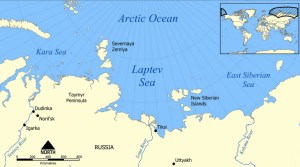
Oil has been found in a field below the LAPTEV Sea. This sea lies on the northern coast of Siberia. To the west is the Taymyr Peninsula which is topped by Severnaya Zemlya and to the east are the New Siberian Islands, an archipelago in the extreme north of Russia on the North of the East Siberian coast
.
To say the least, this is a challenging area for oil extraction. The climate is one of the most severe of the Arctic seas. The air temperature is below 0 °С for 11 months a year on the north, and 9 months on the south. The average temperature in January, the coldest month, varies across the sea between −31 °C (−24 °F) and −34 °C (−29 °F) with a minimum of −50 °C (−58 °F). In July, the temperature rises to 0 °С (maximum 4 °С) in the north and to 5 °С (maximum 10 °С) in the south. Strong winds, plus blizzards and snowstorms are common and snow can fall in the summer The sea is characterized by a temperatures, which ranges from −1.8 °C (28.8 °F) in the north to −0.8 °C (30.6 °F) in the south-eastern parts). The distance to Moscow is over 4.000 km.

But the point is that successful extraction will reduce Russian dependence on her current oil sources such as the oil fields in Siberia, and reduce the effect of Western sanctions after the Ukraine crisis – apparently cooperation with America fell through, secondarily to sanctions after the military intervention in the Ukraine and Russia’s annexation of Crimea.

To facilitate transport, a nuclear- powered icebreaker is being built in St Petersburg. This will be the biggest and most powerful of its kind in the world.

There are airfields and bases on the offshore Arctic areas and President Putin is quoted as saying that the Arctic is an extremely important region that will ensure the future of his country. Russian capabilities will increase as she develops the Arctic Region

William Speirs Bruce campaigned energetically for the annexation of Spitsbergen. The First Lord of the Admiralty, Winston Churchill, would have no part in this, writing in 1917 that there was no sound reason to consider annexation – this would require an armed force to safeguard the claim, a claim that, by itself would not prevent the island being used by enemies of Britain. In fact in 1918, in the post W.W.1 Versailles Treaty, the dawning international consensus was that Denmark would ’get’ Schleswig (southern Jutland), Sweden, the Baltic Islands, and Spitsbergen would become part of the Kingdom of Norway, i.e. given away without any consideration of its mineral wealth or strategic value. In world politics British interests were focused on the East, in Mesopotamia and elsewhere.
How times change!

Norman Einstein-ownwork

Dr, EDWARD WILSON – EXPLORER, NATURALIST, ARTIST.

25 Jun

At Cape Adare in Antarctica, a New Zealand Antarctic Conservationist has unexpectedly found a watercolour, painted by Edward Wilson nearly 120 years ago.
Wilson came from an artistic family; he was an instinctive artist from early childhood. His mother Mary Agnes, who taught her son the rudiments of drawing, was a cousin of the artist Frederick William Yeames (A.R.A.), known particularly for the painting ‘And When Did You Last See Your Father? the painting depicting a small Royalist boy being interrogated by Cromwellians in the reign of Charles I,
As a child Wilson wanted to be a naturalist. A dayboy in Cheltenham College, he spent hours and hours at a farm leased by his mother, observing, recording and sketching its teeming profusion of wildlife – he had a famously quick eye for spotting the small inhabitants of hedgerows and became a remarkable field naturalist.
He studied medicine; initially at Cambridge for preclinical work, followed by clinical training at St George’s Hospital London. Throughout, his interest in art continued. He was a follower of Ruskin, England’s greatest art critic and later he greatly admired Turner who, Ruskin wrote, represented nature with an accuracy that made him unique.
His artistic ability was recognised and appreciated when he was in St George’s; he drew hospital pathological specimens for publication in ‘The Lancet’, he was given the rare privilege of unrestricted entry to the Zoological Society grounds, his drawings of fellow students were cherished.
He was always a keen ornithologist–it was said that he could not only recognise each bird song, but identify what that bird was doing as it sang! He received advice from established bird artists and illustrated ornithological publications, here his aim was to make his bird pictures lifelike – he hated paintings of stuffed birds. ‘No one would think of painting preserved flowers –why on earth do they paint preserved birds?’
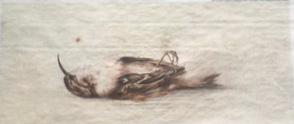
Near the end of his medical training he became ill with a chest complaint thought to be tuberculosis. Amazingly, in those days patients were not necessarily isolated and initially he went to a house party in Norway where he continued painting. His symptoms persisted and he was sent to a Spa in Davos (where patients without a temperature sat at communal tables, no doubt passing their germs nicely around)! and it is here in 1899, that it is thought that he painted the image found at Cape Adare, a dead Tree Creeper (a European woodland bird). The painting had the initial T on it.
Josefin Bergmark-Jimenez the New Zealand Antarctic Heritage Trust conservationist, who found the painting, was reported as being unable to stop looking at it, she was thrilled by its vibrancy. But the provenance of the painting was not immediately clear until Bergmark-Jimenez attended a lecture on Wilson in Canterbury University, when she immediately recognised Wilson’s authorship. This may well have been the lecture I gave at Canterbury University on the 8th March 2017! I do hope so!
Apart from naturalist subjects, Wilson was an ‘exploration’ artist. ’The Discovery’ expedition of 1901 was probably the last expedition where artistry was the main method of producing accurate records of the previously unknown continent and Wilson made extensive drawings and paintings of the Antarctic interior He had accurate colour recall, never using a colour grid and when Scott checked the distances shown in his paintings, he found them to be astonishingly accurate. When ‘Discovery’ reached England Wilson’s exhibited paintings were viewed by thousands of visitors fascinated to learn about the unknown continent.
Wilson was, undoubtedly, one of the most outstanding artists to have worked in the Antarctic.

New Zealand Antarctic Heritage Trust

BASES IN ANTARCTICA

12 Jun

In 1903 William Speirs Bruce departed his winter base in the South Orkneys and sailed to Argentina for refueling and refit of his ship the Scotia. On arrival in Buenos Aires he offered the continued control of his South Orkney meteorological and magnetic huts to Argentina and agreed to transport Argentine scientist to the site to continue the scientific work under the leadership of his meteorologist Mossman. His rationale was firstly, to ensure that his team’s detailed work would continue and secondly, to further his dream of a coordinated complex of meteorological stations in and around the Southern Atlantic. His motives were purely scientific.
On arrival at Buenos Aires Bruce contacted both the British First Minister
Mr. W. Haggard and the head of the Argentine Meteorological Service – a Mr. Walter Davies. Haggard contacted both the British and Argentine governments and the Argentine authorities responded with remarkable alacrity, thanking Dr. Bruce and promptly accepting the offer within a few days (incidentally about three months before Haggard heard from the British authorities)!
The Argentinean government clearly knew what they were doing. They allocated the work of ‘Postmaster’ to one of their staff. Stamps were issued representing the South Orkneys as an Argentinean suburb. This was a most significant decision -the presence of a postmaster is an internationally recognized part of demonstrating effective administration and authority over any claimed and occupied area. The South Orkney station has now been continuously manned by Argentina for the past 114 years. Bruce’s decision thus opened the door for the claims and counter claims in the region that continue to this day.
Argentina’s claim is based on her continued occupation of the station. British claims to the area are via the Falkland Islands Dependencies, a complex constitutional arrangement for administering British territories in Sub-Antarctica and Antarctica. In 1908 the Dependencies were listed as: South Georgia, the South Orkneys, South Shetlands, and the Sandwich Islands, and the territory of Graham’s Land, an area south of the 50th parallel S, and between 20° and 80° W. longitude. The agreement was modified in 1917 when it was recognized that this definition could be interpreted as a claim on Southern Argentina and Chile! Also explicitly, to extend to the South Pole.
Argentina’s challenge to the Dependencies came first in the late 1920s and then more extensively in the second-world war. In response, in the height of World War II, in the Antarctic Summer of 1943/44, Britain established what became a permanent occupation called ‘Operation Tabarin’. This was primarily a political statement — the Admiralty and Colonial Office aimed to strengthen British territorial rights to the sovereignty of the Falklands Island Dependency, whilst the Foreign Office aimed at minimizing disruption to Britain’s long-standing ties with Argentina and, particularly at that dark time, to ensure the shipment of war-time meat supplies.
Tabarin was the basis from which Britain’s subsequent post-war, long-term involvement in Antarctica developed. The Falklands Island Dependency Survey was renamed the British Antarctic Survey in 1962, its northern boundary changed to 60°. The organization now operates three research stations in the British Antarctic Territory: year round at Rothera, Halley, and summer only at Signy. In addition there are two summer field support stations: Fossil Bluff and Sky Blu.
In addition to continuous climatic, oceanographic, geographic, ice, atmospheric and space weather observations, findings include the record of a volcanic eruption from under the Antarctica ice sheet, which occurred over 2.000 years ago. This was, apparently, the biggest eruption in the last 10,000 years. The volcanic ash was found on the ice surface. A world-changing observation in 1985 was the discovery of the hole in the ozone layer over Antarctica. This led to an international reduction in the use of chlorofluorocarbons (CFCs) and other ozone depleting substances (ODS) which are mainly responsible for man-made chemical ozone depletion and which were used, for example, in fridges and inhalers.
Halley Research Station is built on a floating ice shelf in the Weddell Sea. The current Halley (VI), is the world’s first re-locatable research facility and indeed has been moved recently because of huge ice cracks in the ice shelf.
Signy is in the South Orkneys Island where Bruce’s work was based. It is a laboratory for biological research open from November to April each year (the southern hemisphere summer).
Bruce is not forgotten here. The Scotia Sea in the South Atlantic is named for his expedition. Also the research community named a laboratory on Signy Island for him in 2016.